Iran foreign minister says Strait of Hormuz ‘completely open’
Iran says ‘passage for all commercial vessels through Strait of Hormuz’ open during the Israel-Lebanon ceasefire.
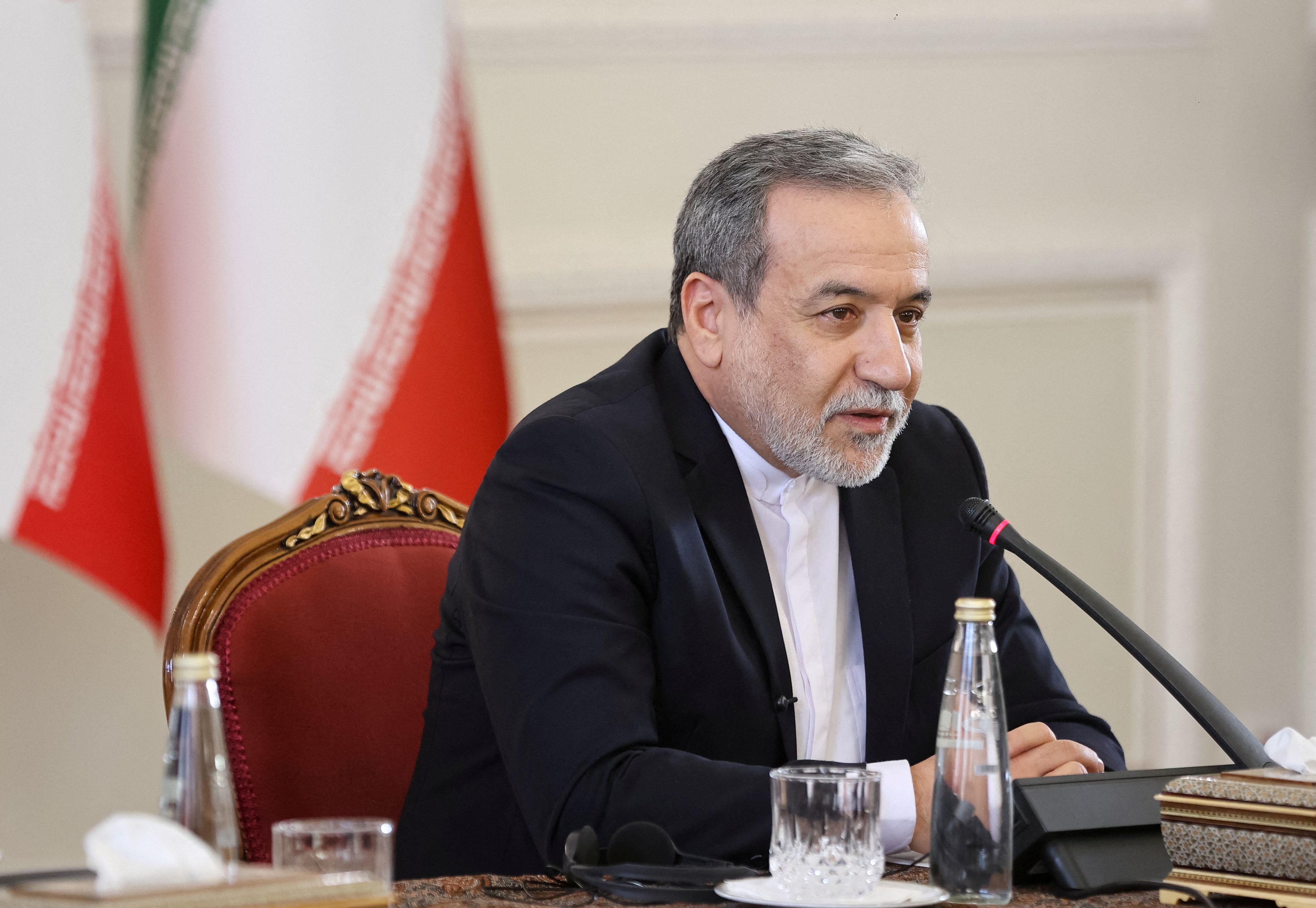

Iran has said the Strait of Hormuz is “completely open” for all commercial vessels and will remain so during the Israel-Lebanon ceasefire, as United States President Donald Trump said an agreement to end the US-Israeli war on Iran was “very close”.
“In line with the ceasefire in Lebanon, the passage for all commercial vessels through Strait of Hormuz is declared completely open for the remaining period of ceasefire,” Iranian Foreign Minister Abbas Araghchi said in a post on X on Friday.
Recommended Stories
list of 3 items- list 1 of 3Why are anti-war protests in the West muted on Iran?
- list 2 of 3What we know about the Israel-Lebanon ceasefire
- list 3 of 3The three clocks of the Iran war
A 10-day ceasefire was agreed upon between Israel and Lebanon late on Thursday, though it was unclear whether the Iran-aligned armed group Hezbollah, which has been fighting against Israel’s invasion of southern Lebanon over the course of the war on Iran, would recognise it.
The passage of vessels through the strait will be on the coordinated route as already announced by the Ports and Maritime Organisation of Iran, Araghchi added.
Following Araghchi’s announcement, oil prices fell below $90 a barrel. International benchmark Brent crude futures fell to $87.94 a barrel, down 11.5 percent on the day. US crude fell a similar amount to $83.33 a barrel.
Trump confirmed in a social media post that the strait was “completely open and ready for business and full passage”, though he went on to add that the US naval blockade of Iran would “remain in full force” until Iran reached a deal with the US to end the war.
He said in a separate post that Iran had agreed to “never close the Strait of Hormuz again”.
“It will no longer be used as a weapon against the World!” he added.
A senior Iranian military official told the state media that only nonmilitary vessels would be allowed to transit the strait, with permission from the Iranian Islamic Revolutionary Guard Corps Navy.
The US-Israel war on Iran, which started on February 28, has killed more than 3,000 people. The conflict saw Iran block traffic through the Strait of Hormuz, through which a fifth of the world’s oil and liquefied natural gas transits.
The US went on to blockade Iran’s ports in the Strait of Hormuz and the Gulf after US-Iran talks in Pakistan failed to reach a breakthrough on Sunday.
Trump maintains pressure on Iran
Reporting from Washington, DC, Al Jazeera’s Alan Fisher said, “The chances of the US lifting the naval blockade were never particularly high, as the Trump administration sees that as a way of putting more pressure on Iran.”
Fisher said the main point for Trump was ensuring that Iran had no nuclear weapons. “If Iran does give that assurance, what will they get in return? It’s the big question. They’ll want to know that if they give something quite significant, they’re getting something in return.”
Later on Friday, Trump told the AFP news agency that there were “no sticking points” left for a deal to end the war with Iran, adding that an agreement was “very close”.
Trump told the Reuters news agency that the US will work with Iran to recover its enriched uranium and bring it back to the US as part of any deal.
“The U.S.A. will get all Nuclear ‘Dust,’ created by our great B2 Bombers – No money will exchange hands in any way, shape, or form,” Trump wrote on Truth Social, after an Axios report that Washington was considering a $20bn cash-for-uranium exchange.
Earlier on Friday, Iran’s state media outlet Mizan said no talks had taken place regarding Iran’s enriched uranium.
“No negotiation regarding the transfer of Iran’s highly enriched uranium to America had ever taken place, and naturally, there is no agreement on this matter, either,” it said, citing sources.
Israel ‘prohibited’ from bombing Lebanon
Meanwhile, Trump said on Friday that Israel would no longer bomb Lebanon, and that any US deal with Iran is not contingent on events in Lebanon.
“Israel will not be bombing Lebanon any longer. They are PROHIBITED from doing so by the U.S.A. Enough is enough!!!” he declared in a social media post.
A spokesperson for the United Nations peacekeepers in the south said Friday that they had not observed any air attacks since midnight, but accused the Israeli military of violating airspace and conducting artillery shelling in southern Lebanon.
The Israeli military did not immediately comment. According to the agreement shared by the US Department of State, Israel can act in self-defence against imminent attacks, but cannot carry out offensive operations against southern Lebanon.
Mairav Zonszein, a senior Israel analyst with the International Crisis Group, told Al Jazeera that direct talks between Lebanon and Israel constituted an important breakthrough, but the prospects of these talks moving towards a more sustainable agreement remain remote.
“Nevertheless, a diplomatic track that strengthens the Lebanese government and sees a gradual withdrawal of Israeli presence will contribute to weakening Hezbollah politically,” Zonszein said.
