Israel hits railway bridge, threatens trains before Trump deadline expires
The bridge linking Saudi Arabia and Bahrain has been briefly closed as Trump threatens to hit Iranian infrastructure.
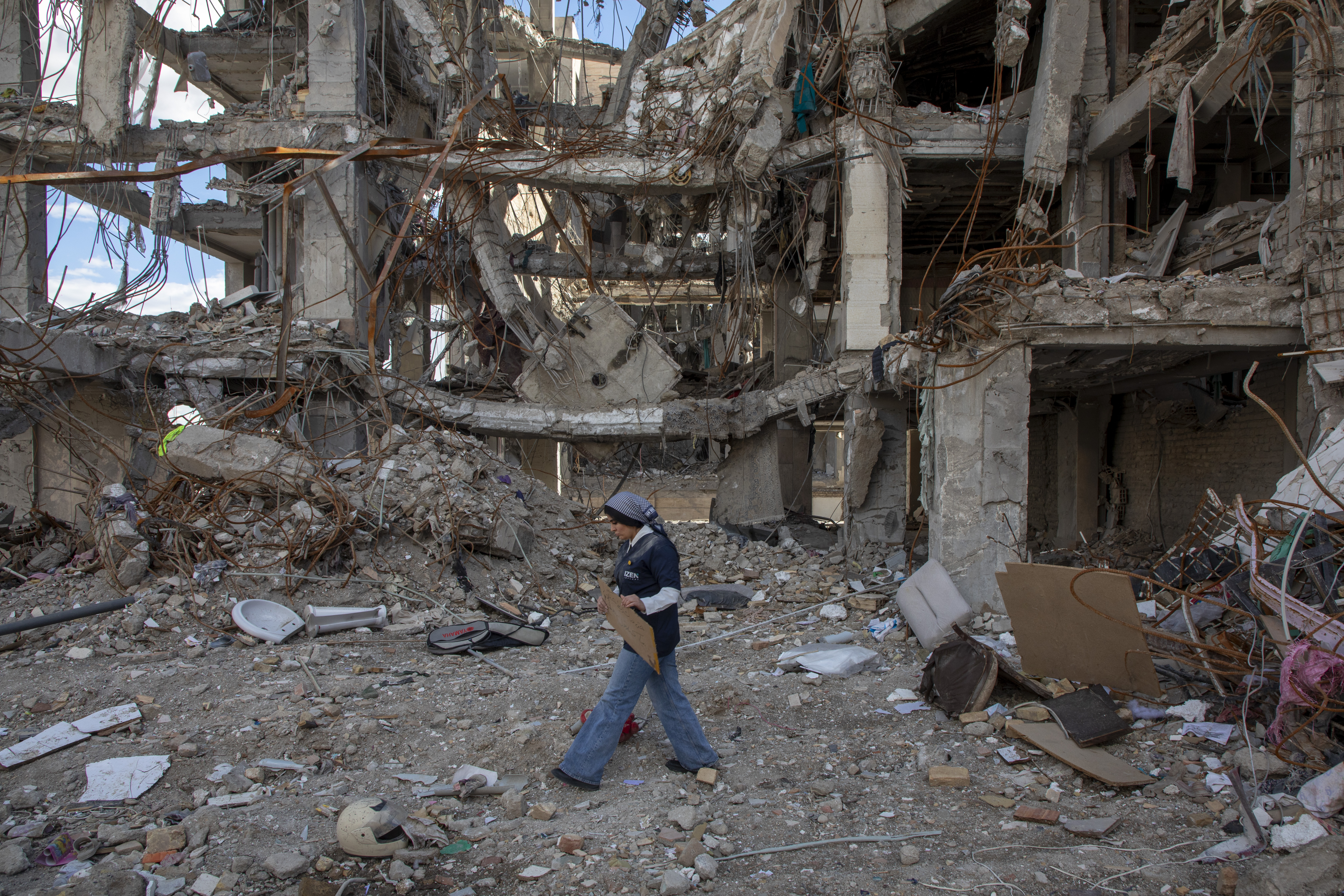

At least two people have been killed in an Israeli strike on the Yahya Abad railway bridge in central Iran’s Kashan city, according Isfahan’s deputy governor.
The news came on Tuesday, hours after Israel threatened to target trains and railways before US President Donald Trump’s deadline to open the Strait of Hormuz expires.
Recommended Stories
list of 3 items- list 1 of 3Trump claims Iranians begging US to keep bombing Iran
- list 2 of 3Trump says US could charge for Strait of Hormuz passage amid Iran war
- list 3 of 3Why is Iran’s Bushehr nuclear power plant being attacked?
“For the sake of your security, we kindly request that from this moment until 21:00 Iran time [17:30 GMT], you refrain from using and travelling by train throughout Iran,” the military posted on X.
“Your presence on trains and near railway lines endangers your life,” it added on its Persian-language account.
Following the Israeli threats, train travel to and from Iran’s second city of Mashhad was cancelled until further notice, according to Governor Hassan Hosseini who was quoted by local media.
“Due to the immoral warning of the Zionist regime regarding the attack on the country’s railways and in order to exercise caution, all train movements from the Mashhad Railway have been cancelled until further notice,” Hosseini said.
US President Donald Trump had threatened to bomb Iran’s bridges and power plants unless Iran reopens the Strait of Hormuz on Tuesday at 8pm EST (01:00 GMT Wednesday).
Iran, in turn, has threatened “devastating” retaliation if the country’s civilian infrastructure is hit.
Earlier, the Israeli military said it had recently completed a new wave of air attacks on infrastructure across the country, including Tehran.
According to Iran’s semi-official Mehr news agency, a residential building in central Tehran was hit in one of the latest strikes, and a synagogue adjacent to the residential building was also destroyed.
Later on Tuesday, an attack on a bridge near the Iranian city of Qom was reported by Morteza Heydari, the deputy governor of the Qom province, according to local media.
“A few minutes ago, one of the bridges on Qom’s communication lines, outside the city of Qom and in the west of the province, was attacked by American and Zionist enemy projectiles,” Heydari said, according to the Iranian reports.
At least 2,076 people in Iran have been killed by US-Israeli attacks since the war began more than five weeks ago, Iran’s Ministry of Health says.
Saudi-Bahrain bridge temporarily closed
Amid Trump’s threats, an important bridge linking Saudi Arabia and Bahrain has been briefly closed to traffic over fears of attacks from Iran, according to reports.
In a post on X, the authority overseeing the King Fahd Causeway said traffic over the bridge had been “suspended as a precautionary measure” over Iranian attacks targeting Saudi Arabia’s Eastern Province.
It was later reopened.
The 25km (16-mile) bridge is the only connection by road for Bahrain, home to the US Navy’s 5th Fleet, to the Arabian Peninsula.
Since the US-Israel war on Iran began on February 28, Iran has retaliated with drone and missile attacks against Israel, Gulf nations hosting US military assets, along with Jordan and Iraq.
“The Gulf has borne the brunt of this conflict, and just today in the morning, we saw numerous alarms being sounded in Bahrain, and in the UAE just a couple of hours ago,” said Al Jazeera’s Malik Traina, reporting from Kuwait City.
“Earlier … we heard from the Saudi Ministry of Defense that they intercepted seven ballistic missiles in the eastern area.”
UN vote on Hormuz expected today
The United Nations Security Council is expected to vote on Tuesday on a watered-down resolution calling for the unblocking of the Strait of Hormuz, far from sponsoring the Gulf countries’ initial goal of obtaining clearance to free it by force.
A draft seen by the AFP news agency on Monday no longer mentions authorisation to use force, even defensively. However, Russia, a longstanding ally of Iran, as well as China, could still veto the text. For this reason, a vote scheduled for last Friday was delayed.
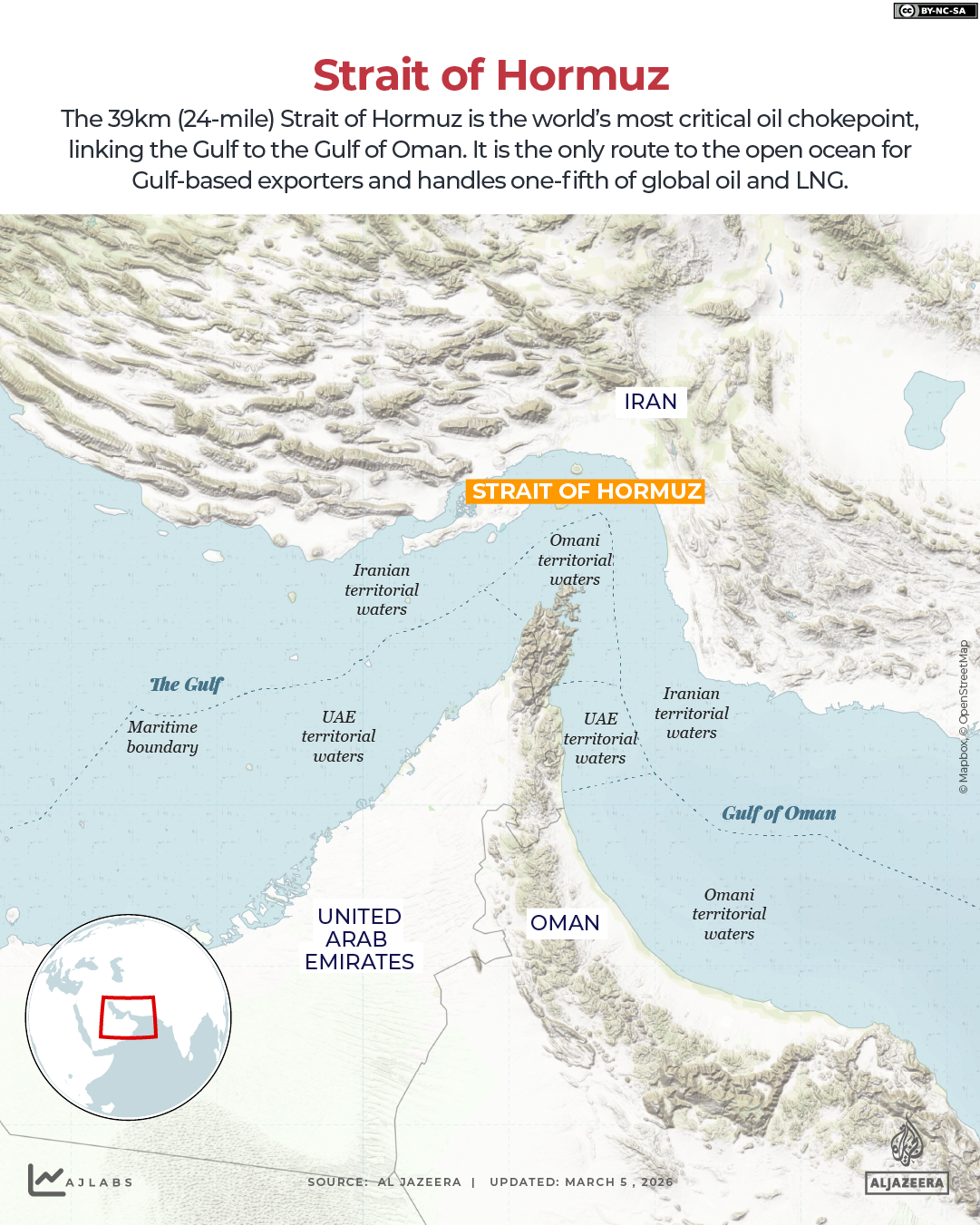
Iran’s blocking of the strait has led to widespread disruption of global energy markets, forcing countries to implement austerity measures to lessen the impact of skyrocketing oil and gas prices.
Discussing whether Trump would go ahead with his threat to obliterate Iran’s civilian infrastructure if the strait were to remain closed, Trita Parsi, vice president of the Quincy Institute, told Al Jazeera the US president still has the option to extend the deadline to reopen without losing face if he sees a diplomatic way out.
“One of the benefits Trump has is that, frankly, he doesn’t have much credibility, so he doesn’t have much to lose,” he added.
“I can definitely see a scenario in which, if he thinks that there is some reason for him to extend the deadline, he would just do so. He’s already done so several times in the last 35 days.”
