US-Israeli war on Iran: What is happening on day 40?
The US and Iran agree to a two-week truce on Tuesday, just an hour before Trump’s deadline to escalate the conflict expired.
US ceasefire allows negotiations on Iran’s ‘workable’ 10-point plan

Iran says it has accepted a two-week ceasefire, with talks set to begin on Friday in Pakistan’s capital, Islamabad, after United States President Donald Trump agreed to suspend attacks on the condition that Tehran fully reopens the Strait of Hormuz.
Iran’s Minister of Foreign Affairs Abbas Araghchi said safe passage through the strategic waterway will be ensured for two weeks through coordination with the country’s armed forces.
Trump’s move followed a request from Pakistan’s Prime Minister Shehbaz Sharif, who urged Washington to extend its deadline for a deal and called on Iran to reopen the strait.
In Iran:
US, Iran, Israel agree to last-minute ceasefire: The US, Iran and Israel agreed to a two-week truce on Tuesday, just an hour before Trump’s deadline to escalate the conflict expired. Tehran agreed to temporarily reopen the Strait of Hormuz, while the White House confirmed Israel’s participation. The breakthrough followed talks with Pakistan’s leadership, which had pushed for a ceasefire.
Hormuz terms under ceasefire: Under the agreement, safe passage will be coordinated, with Iran and Oman allowed to charge transit fees on passing ships. Tehran plans to use the revenue for post-war reconstruction.
Ten-point peace plan: Talks are set to begin on Friday in Islamabad, mediated by Pakistan’s prime minister. Tehran’s proposal includes lifting sanctions, creating a war-loss fund, a potential US troop withdrawal from the Gulf, and recognition of Iran’s right to enrich uranium in exchange for a pledge not to build nuclear weapons. It is unclear whether the US has agreed to any of these proposals.
Tehran synagogue struck: The Israeli military accepted that an overnight strike – which it said was targeting a senior Iranian commander – caused “collateral damage” to a synagogue in Tehran, expressing regret over the incident.
Tehran leaders project strength: Al Jazeera’s Mohamed Vall reported from Tehran a “feeling of pride among the leaders”, who are telling the public that “this war is ending on Iran’s terms”.
War diplomacy:
Trump says China helped bring Iran to talks: Donald Trump told AFP he believed China played a role in pushing Iran to negotiate the two-week ceasefire. “I hear yes,” he said when asked whether Beijing was involved in bringing its ally Tehran to the table.
NATO chief to meet Trump in Washington: Mark Rutte is set to meet Trump on Wednesday, with discussions expected to focus on the Iran situation as well as Russia’s ongoing war in Ukraine, according to a NATO official.
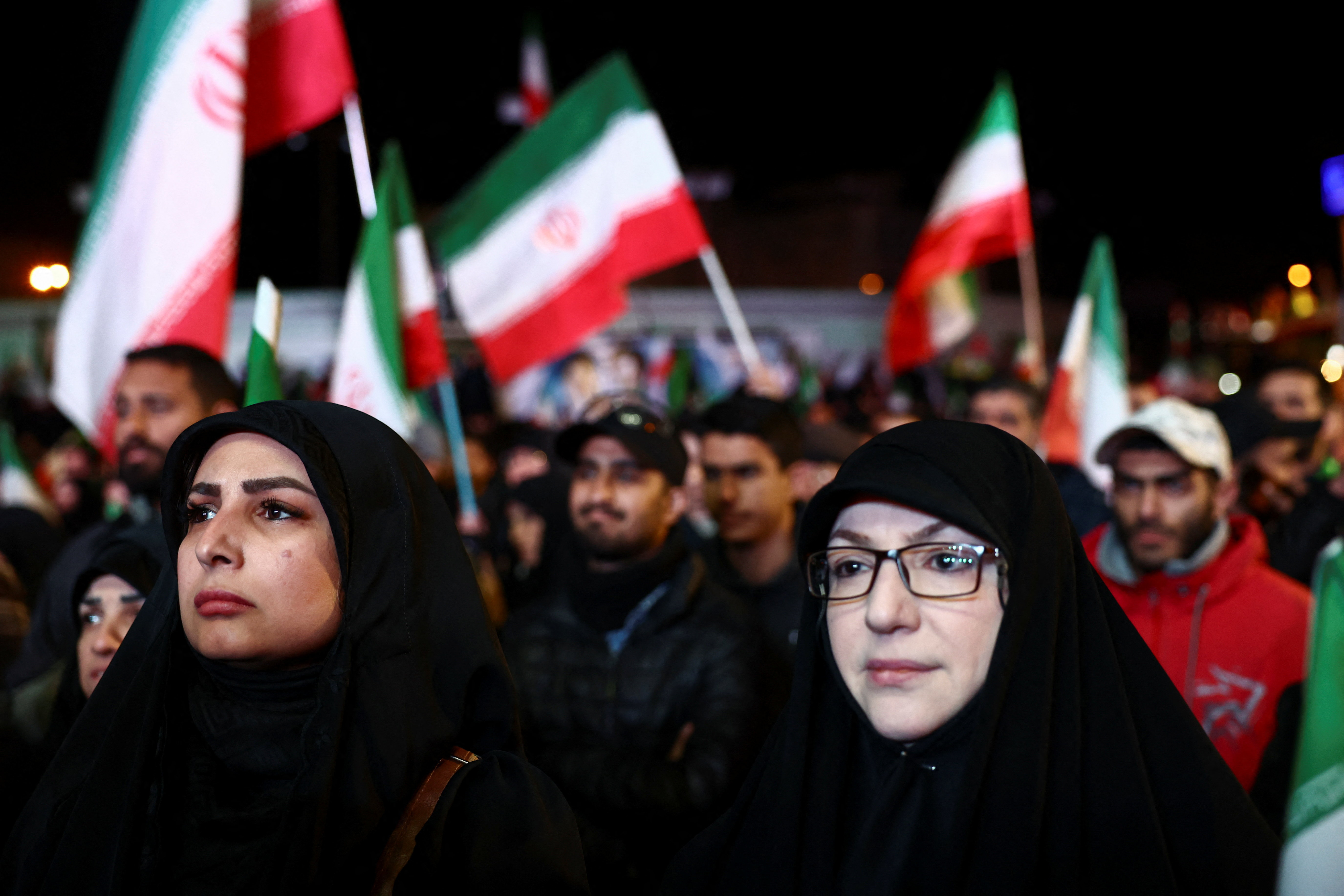
Regional reactions: The ceasefire has triggered street celebrations in Tehran and Baghdad, with Iranian leaders declaring the conflict is ending “on Iran’s terms”. However, some citizens remain sceptical, warning the US and Israel may be using the pause to “buy time” and regroup.
Israel backs truce with limits: The office of Prime Minister Benjamin Netanyahu confirmed support for the US decision to suspend strikes on Iran, but stressed the ceasefire does not extend to Lebanon.
A fragile exit, and a narrow diplomatic window: Analyst Trita Parsi described the ceasefire as a strategic retreat by Trump, arguing the conflict had “become an absolute disaster” and forced the White House to seek a way out. “Trump needed an exit, and he took it,” he said, warning the next two weeks will be decisive, either opening a path to genuine diplomacy or allowing tensions to flare again.
Parsi noted there is “potential” for meaningful talks, but cautioned “we’re not quite there yet,” underscoring the fragility of the moment. Even if negotiations fail, he added, a return to full-scale war is unlikely in the same form. Iran still retains key leverage, particularly its ability to disrupt the Strait of Hormuz, giving it the capacity to exert sustained pressure on both Washington and the global economy.
In the Gulf
- Gulf countries sound alarms: Gulf countries including Kuwait, Bahrain, Qatar, Saudi Arabia and the United Arab Emirates issued near-simultaneous alerts and activated air defences in the lead-up to the announcement of a ceasefire.
- Bahrain says fire contained after attack: No injuries were reported at an unnamed facility following the incident, authorities said.
- Saudi Arabia role acknowledged: The country was briefly mentioned and thanked by Australian leaders for its role as a mediator who helped facilitate the current ceasefire agreement.
- Qatar: Before the ceasefire was reached, Qatar said the war was approaching a stage where it could no longer be contained. A Foreign Ministry spokesman urged urgent de-escalation, saying, “This is why we have been urging all parties to find a resolution… before it’s too late.”
In the US
- US frames ceasefire as leverage for diplomacy: White House Press Secretary Karoline Leavitt said the military campaign was a success that achieved its goals, rejecting the idea of a retreat. She described the ceasefire as a calculated move, arguing it “created maximum leverage” for Trump to pursue tough negotiations, opening the door to a diplomatic solution and long-term peace.
US journalist released in Iraq: Secretary of State Marco Rubio confirmed the release of American journalist Shelly Kittleson, who had been kidnapped in Iraq days earlier. Her freedom came after the armed group Kataib Hezbollah said it would release her on the condition she leave the country immediately.
Scrutiny over ‘perfectly timed’ bets: An online prediction platform, Polymarket, is facing questions over possible insider trading after an anonymous user reportedly made $400,000 by accurately betting on the start of US military action and the timing of the ceasefire — raising concerns about leaks tied to geopolitical decisions.
In Israel
- Israel backs ceasefire, but not in Lebanon: Israel said on Wednesday it supported the two-week ceasefire with Iran but maintained the deal “does not include Lebanon”, where it has been fighting Iran-backed group Hezbollah.
- Reluctance over ceasefire: Al Jazeera’s Rob McBride reported that Prime Minister Netanyahu is “widely suspected of having derailed the last round of talks” brokered by Oman and remains “very wary of the word ‘ceasefire’.”
- Five people injured in Israel: Israel’s emergency services said five people in northern Israel were injured following missiles from Iran and rockets from Lebanon.
- Israel warns Lebanon ships: The Israeli military urged all vessels in the maritime zone off the coast of southern Lebanon to immediately head north of the city of Tyre, warning that it would operate in the area.
In Iraq and Lebanon
- Strikes continue in Lebanon: Israeli operations have persisted. An air raid reportedly struck an ambulance in Qlaileh, near Tyre, while shelling was also reported in Baraachit in southern Lebanon. Lebanese health officials say medics and rescue crews are being repeatedly targeted.
- Hezbollah signals defiance: The Lebanese group Hezbollah has not directly commented on the ceasefire, but shared a past statement by the late Iranian supreme leader, Ayatollah Ali Khamenei, alongside imagery of torn US and Israeli flags, warning: “We will make the enemy kneel.”
Iran-aligned groups pause operations in Iraq: The Islamic Resistance in Iraq said it will observe the truce, suspending military operations in Iraq and across the region for two weeks.
Deadly strikes in Iraq before ceasefire took hold: The truce followed a final surge in violence, with Iraqi officials reporting that strikes late on Tuesday killed at least seven people, including two children.
Global economy
- Oil drops below $100:Crude prices fell on Wednesday after Trump announced a two-week ceasefire with Iran, easing fears of supply disruptions.
- Caution despite ceasefire relief: Alex Holmes of the Economist Intelligence Unit said the ceasefire remains uncertain, with markets in “wait-and-see mode” as a “big gap” remains in negotiations. While oil prices fell after the announcement, he noted they are still significantly higher than in late February.
